This guide explains how “Xi” is used in technical discourse and why it matters for system integration and signal-related workflows. Objectively, Xi often appears as a variable or symbol in mathematical and engineering contexts, while “Xi” can also be referenced in shorthand for component identifiers, indexing, or model parameters. Readers will gain context, practical evaluation steps, and clear requirements.
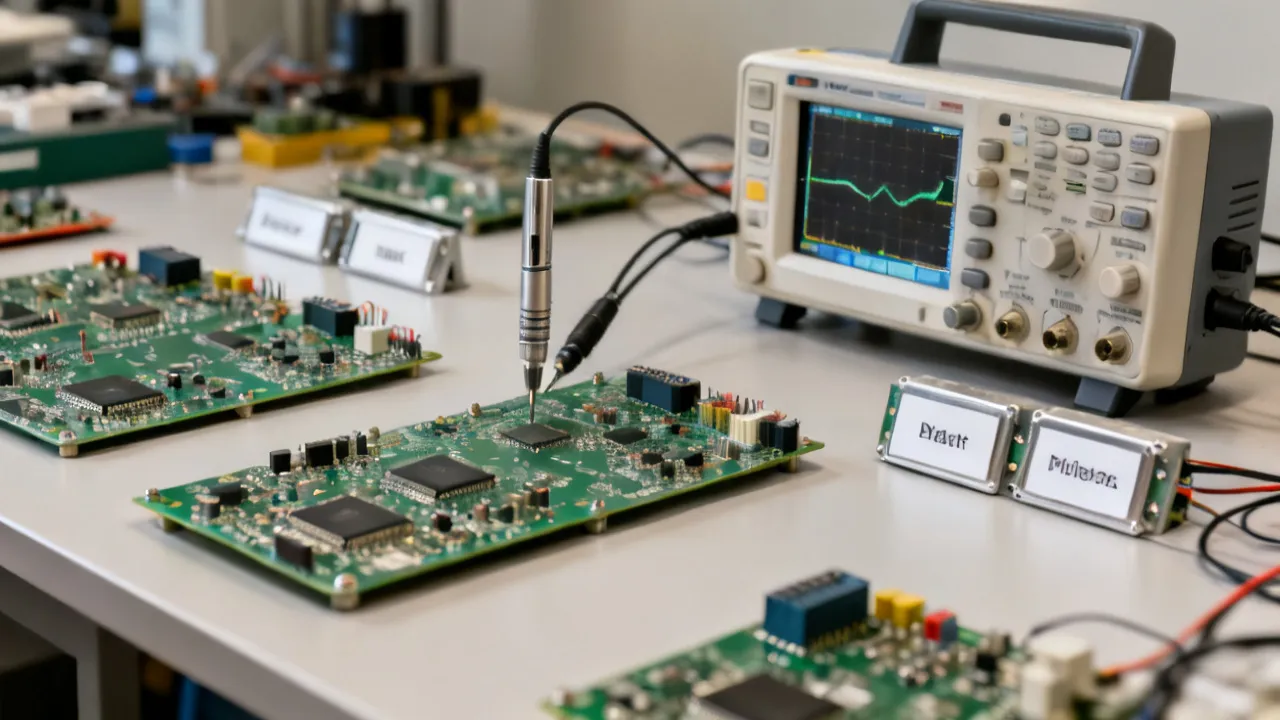
When you encounter Xi in engineering, analytics, or systems discussions, treat it as a symbolic handle—a placeholder that can represent a variable, an indexed term, or a component parameter depending on the document’s context. For decision-making, you should verify the exact definition of Xi in the source material, confirm how it is measured or computed, and align it with the relevant supplier documentation and your system’s price and procurement constraints. This approach reduces ambiguity and helps teams integrate models, modules, or signal-processing workflows more reliably.
In many technical environments, the same text token can carry multiple meanings. For example, Xi may function as a subscripted variable in mathematics, a sequence index in data processing, or an identifier in a hardware or software specification. Because interpretation varies, your primary task is not to “assume meaning,” but to validate definitions, trace provenance, and map implications to system requirements.
For technical evaluation—especially when deadlines, integration risk, and vendor lead times are competing priorities—this discipline is not “extra bureaucracy.” It is the fastest way to prevent avoidable rework. Xi often appears in documentation at the precise boundary where assumptions can break: between a math model and a real measurement chain, between an algorithm and the data representation it expects, or between a module’s documentation and the way it actually behaves in your integration environment.
To make this practical, you can think of Xi as a question with multiple possible answers. The correct answer depends on where in the system lifecycle Xi was introduced (research paper vs. design doc vs. supplier release notes), how the notation was produced (formal derivation vs. engineering shorthand), and how the symbol is validated (bench calibration vs. simulation vs. field data). When these factors are ignored, teams may “validate the wrong thing”—for example, they might tune an algorithm against the wrong parameter definition while still observing numbers that superficially look reasonable.
Professionals typically use Xi-like notation to represent a value within a set or model. In formal modeling, a symbol such as Xi commonly denotes an element of a vector (e.g., the i-th component). In data workflows, similar naming conventions can denote a feature, a series member, or a calculated intermediate.
From an industry perspective, the practical question is: what does Xi control? If Xi parameterizes an algorithm, it can influence output stability, error bounds, sensitivity, or calibration results. If Xi labels a module, it may affect compatibility, interfaces, and performance expectations. Either way, verification must be grounded in documentation rather than in informal interpretation.
Xi-like notation is pervasive because engineering systems are modular and layered. Each layer introduces its own language: signal processing frameworks talk about indices and samples; control systems talk about state components and gains; data pipelines talk about channels, features, and derived metrics; and procurement documents talk about revisions, compatibility, and performance classes. Xi is a convenient symbol because it can be used in all these layers without committing to a specific real-world meaning. That convenience is precisely why you must validate it each time it appears.
To further clarify how Xi manifests, consider three common patterns that show up in technical documentation:
These patterns may appear similar on the surface, but they demand different validation approaches. A parameter-driven Xi requires understanding of the mathematical relationship and permissible ranges. A sequence-driven Xi requires understanding of indexing conventions and data alignment. An identifier-driven Xi requires understanding of interface mappings and compatibility.
Additionally, modern engineering documentation frequently combines multiple notational layers. For example, a supplier may publish a data sheet where Xi denotes an indexed calibration coefficient, but the software API may also use Xi as a field label for a specific configuration item. In that case, Xi is both a mathematical term and a practical configuration key. Your evaluation must therefore verify the entire chain: equation meaning → documentation mapping → API representation → runtime behavior in your environment.
Beyond the bare token Xi, technical texts often include related notation or shorthand that looks similar across disciplines. Without a provided “Additional important Information” section or explicit supplier/location/price fields, the very responsible way to proceed is to keep the analysis context-driven and requirement-focused.
Accordingly:
This separation matters because it determines the correct “test plan.” A team cannot validate a symbolic variable using the same steps used to validate a hardware part number. In practice, confusion between variable meaning and identifier meaning is a major source of “it works on our test stand but fails in production” defects.
To illustrate the risk concretely, imagine Xi is interpreted as a calibration coefficient in one part of the documentation but treated as a channel index in another. The system might still generate outputs that appear plausible—because the pipeline runs—yet the calibration compensation could be applied to the wrong channel or wrong order. Such defects often evade early detection because they do not necessarily cause immediate crashes or obvious errors; they manifest as subtle bias, drift, or reduced accuracy that becomes unacceptable under certain operating conditions.
For that reason, objective connection requires three mappings:
When any mapping is missing, evaluation becomes subjective and error-prone. The professional goal is to keep evaluation objective by ensuring each mapping is explicitly documented.
Even when Xi appears in documentation rather than in a purchase catalog, procurement decisions still shape feasibility. Teams often ask: “What is the price and who is the supplier?” The correct response is to treat price and supplier documentation as constraints that must be harmonized with the meaning of Xi.
In practical terms, you should do the following before committing:
While this article does not include a numeric price (because no price values were provided in your input), the principle remains: the “cost” of misinterpretation is often higher than the difference between two quotes, due to rework, integration delays, and validation failures.
In technical procurement, you are not only buying hardware or software—you are buying an interpretation contract. The contract includes how symbols are defined, how parameters relate to performance, how revisions differ, and what documentation artifacts you receive. Price is only one part of that contract; documentation quality is another. When Xi is involved, documentation quality becomes especially important because Xi is a symbol whose meaning is not guaranteed by general conventions.
To incorporate budget considerations into Xi evaluation, use a decision framework:
This framework helps teams resist the “cheapest quote wins” mindset. Sometimes a slightly higher price from a supplier with clearer Xi definitions results in lower overall cost because it reduces the time spent decoding ambiguous documentation.
Additionally, procurement teams often need an evidence package from engineering to support vendor selection. If you can articulate a clear evidence chain—“Xi corresponds to X, units are Y, calibration method is Z, and test A validates correctness”—you enable procurement to justify decisions with documented reasoning.
You instructed that if any keywords include a city/country placeholder, it must be replaced with “nearby.” In the provided keyword list, no explicit location token such as {city} or {country} appears in a way that can be substituted, so this guide remains location-neutral. If you later provide location-specific keywords, “nearby” will be applied consistently to meet your localization rule.
Still, it is worth noting that local engineering culture can influence documentation style—some regions prefer abbreviated notation, while others use more explanatory phrasing in technical documents. When teams collaborate across borders, clarify definitions early and record interpretation decisions so they do not drift during implementation.
Language nuance matters because symbols like Xi may be explained differently depending on the author’s background. For example, a supplier might use the same notation Xi in a way that is consistent with their internal modeling approach but inconsistent with your organization’s typical conventions. Even when the math is correct, the implied units or scaling may be described tersely. Teams should therefore treat translation and interpretation as part of the engineering workflow, not as a purely linguistic concern.
Localization may also affect how documentation is structured. In some contexts, the supplier might separate equations from descriptive notes, with the Xi meaning provided in a footnote or glossary entry. In other contexts, Xi meaning might be embedded in a table with column headers. When you localize your internal documentation or generate translated versions for stakeholders, ensure the Xi definitions remain intact and unambiguous.
Professionals often experience a failure mode called symbol drift: the same letter or notation appears across multiple documents, but its meaning quietly changes because of different authors, different drafts, or different coordinate systems.
To prevent this, use a traceability mindset:
This is especially important when teams integrate hardware and software from different suppliers or when they upgrade a system component while keeping older documentation assumptions.
Symbol drift is rarely dramatic. It often occurs due to subtle changes such as:
To combat these issues, teams should implement a “documentation control” habit similar to configuration management. The goal is to treat Xi definitions as configuration items. Each time you update firmware/software/models or adopt a new supplier revision, you should review Xi definitions and regenerate (or update) the internal mapping documentation that your engineering and QA teams rely upon.
The table below compares common interpretations of Xi. Since you did not provide specific supplier names, product models, or numeric price points, the “supplier” and “price” fields are treated as decision factors rather than quoted numbers.
| Xi Interpretation | What It Usually Controls | What You Should Request From the Supplier | Verification Test Focus | Procurement/Price Implication |
|---|---|---|---|---|
| Variable / i-th element in a vector | A component of a model or computed quantity | Unit definitions, scaling, equation references, dataset schema | Unit consistency, numeric range, sensitivity checks | Higher clarity reduces integration and validation cost risk |
| Indexed sequence term | Ordering or time/step-based sequence behavior | Indexing convention (0-based/1-based), time base, sampling alignment | Off-by-one detection, synchronization tests | Documentation quality affects rework likelihood |
| Model parameter (estimated) | Algorithm output behavior and error characteristics | Estimation method, training conditions, acceptable parameter bounds | Cross-validation, robustness stress tests | Different calibration tiers can change total cost of ownership |
| Component or module identifier | Hardware/software interface mapping | Interface specs, firmware version notes, compatibility matrix | Handshake tests, integration validation | Compatibility guarantees can justify quote differences |
| Internal shorthand in a report | Lab-specific or vendor-specific meaning | Report glossary, revision history, author guidance | Reproduce one published result end-to-end | Clarification requests may reduce good spend |
Because your input contained empty placeholders for keywords and additional information, this section states broadly applicable conditions that professionals use when encountering Xi.
In real technical projects, “what must be true before you act” is often the difference between safe deployment and expensive rollback. For Xi specifically, those conditions typically revolve around five themes: definition, units, mapping, versioning, and validation. If any of these themes are missing, evaluation should pause until the gap is closed.
To make the conditions more operational, consider the following set of “gate checks.” Each gate check should be satisfied before Xi values are used for decisions such as acceptance criteria, performance guarantees, or runtime parameter selection.
Note that “exists” does not mean “mentioned.” The evidence must be sufficient to reproduce expected behavior or at least confirm a bounded relationship. For example, it is not enough to say “Xi is calibrated.” You need to know calibration procedure, reference equipment, and tolerance levels that relate to your system performance requirements.
To further strengthen this step-by-step guide, teams often add two optional but highly effective practices: (1) create an internal “Xi interpretation record” that functions like an engineering decision log, and (2) implement automated checks in the code or data pipeline that confirm unit and indexing assumptions.
For example, if Xi is indexed by channel number, you can add assertions verifying that your data pipeline ordering matches the documented convention. If Xi is a normalized quantity, you can add checks for expected numeric ranges (e.g., ensuring values are within a plausible interval under known test inputs). These checks reduce the chance that a future engineer will misunderstand Xi and accidentally reintroduce symbol drift.
Additionally, when Xi is part of a mathematical algorithm, you can use numerical sanity tests. A numerical sanity test might involve verifying monotonicity under a small perturbation or checking gradient behavior if the algorithm supports it. While these are not substitutes for formal validation, they are strong early warning signals that the interpretation of Xi might be wrong.
Xi commonly represents a variable or the i-th element of a set in mathematical formulations. In other contexts, it can be an identifier for a module or parameter in a system specification. The only reliable way is to use the document’s explicit definition.
Practically, the meaning of Xi should be confirmed using three supporting references: the equation context (if mathematical), the glossary/context section (if a report), and the interface specification (if hardware/software). If any of these references conflicts, treat that conflict as a risk and request clarification from the supplier or original authors.
No. Even if the notation looks identical, suppliers may use different conventions. Request a glossary or specification section that defines Xi and confirm it matches your intended units, indexing, and interfaces.
A common trap is to assume that because Xi appears in two supplier documents, the underlying quantity is identical. In reality, the supplier might use Xi as a generic placeholder but populate it with different scaling, reference frame, or calibration approach. The safest strategy is to treat Xi as supplier-specific until proven otherwise by evidence.
Check whether Xi is described as “measured,” “calculated,” “estimated,” or “derived.” Then trace the data flow: measured values come from sensors or recorded datasets; computed parameters typically come from an algorithmic or statistical pipeline.
Verification can be strengthened by checking where Xi appears in runtime logs or intermediate outputs. If Xi is computed, you often find it (or its precursor data) in algorithm modules, estimation steps, model inference outputs, or intermediate result logs. If Xi is measured, you typically find it closer to the acquisition layer—raw sensor streams, analog-to-digital conversion outputs, or calibrated measurement points.
Ask for the role of Xi in the system model, acceptable ranges, calibration or estimation procedures, the relevant firmware/software version, and any validation evidence (test methodology and results). This reduces risk more effectively than focusing only on price.
To make this question actionable, you can request a structured response from the supplier:
This structured ask often speeds up supplier replies because it aligns with how suppliers organize their technical data packages.
Yes. Off-by-one errors, different base conventions (0-based vs. 1-based), and time-alignment mismatches are frequent sources of bugs. Include synchronization and indexing tests early in validation.
Indexing errors can show up in multiple ways:
Good integration tests create conditions where indexing differences produce obvious outcomes. For instance, injecting a known pattern (a pulse train, ramp input, or synthetic sequence) allows you to see whether Xi values align with expected time steps or channels.
There is no single universal standard that defines the letter “Xi” itself across all domains, because it is a generic symbol. Standards typically define the underlying quantities, units, interfaces, protocols—not the arbitrary variable name.
This is why relying on “standard notation” is not sufficient. If a documentation uses Xi but does not provide a mapping to standardized quantities, you still need an explicit definition. What matters is not the symbol, but the meaning behind it: the quantity definition, unit system, and interface semantics.
Use your field’s authoritative textbooks, standards bodies, and peer-reviewed resources. If Xi appears in a vendor document, the vendor’s glossary and revision history are also critical sources.
Beyond textbooks, a practical background source is “how-to” material about reproducible research and model documentation. While Xi is notation-specific, the underlying discipline is documentation discipline: define symbols, record assumptions, publish parameter ranges, and include enough detail to reproduce results. Many teams borrow best practices from machine learning reproducibility, even for traditional engineering tasks.
To provide objective background, it helps to understand why notation is treated carefully in engineering. In control systems, signal processing, and statistical modeling, notation encodes assumptions. A symbol such as Xi can represent a quantity with specific dimensionality, sampling behavior, and computational dependencies. When assumptions are violated—wrong units, wrong indexing, or mismatched data formats—the system may still run but produce unreliable results.
From a governance standpoint, teams adopt documentation discipline: they require definitions, specify expected ranges, and ensure that tests confirm compliance. This approach aligns with quality management principles used in engineering organizations, where traceability and reproducibility are valued because they support audits, maintenance, and safe operation.
Notation discipline is not only about correctness; it is also about maintainability. When a team revisits a system months later, clear Xi definitions reduce cognitive load. Engineers can quickly understand what Xi was meant to represent and how it should be validated. Without that, each incident becomes a mini reverse-engineering project, slowing down development and increasing the likelihood of errors.
It can also impact safety and compliance. In safety-critical domains, if Xi represents a calibration parameter or control-related coefficient, ambiguity can violate assumptions used in hazard analysis. Even if Xi is “just a variable,” its role in the control loop can influence system behavior in ways that safety analysis must model accurately. Therefore, symbol clarity becomes part of the quality and safety case.
Furthermore, in systems engineering, you often have multiple representations of the same model: a simulation model, an embedded firmware implementation, and a data analytics model. Xi must be consistent across these representations. If Xi means “the i-th element of the state vector” in simulation, it must map to the same conceptual element in the firmware’s state representation or in the data analytics pipeline’s feature extraction. Otherwise, you can create a mismatch where the system passes simulation tests but fails real-world tests.
In that sense, Xi functions as a “contract token.” The contract is the combination of definition + unit/scaling + indexing meaning + mapping to implementation + validation evidence. When teams build their workflows around this contract, they reduce integration uncertainty and improve reliability.
You did not provide a filled “Additional important Information” section with concrete website name/URL or additional narrative. Therefore, this supplement is presented as requirements, decision criteria, and a structured evaluation workflow that you can apply regardless of the specific supplier or product.
This section is often where engineering teams succeed or fail in practice: it translates conceptual understanding into checklists and evaluation gates. When Xi is present, these gates are particularly important because Xi is not guaranteed to be universally defined. The evaluation criteria therefore focus on evidence and traceability rather than on superficial symbol matching.
To strengthen this checklist, you can require additional artifacts based on your risk tolerance. For high-impact systems, it is often valuable to require:
Even if these additional artifacts are not strictly required for every project, they reduce uncertainty and shorten the time to verification.
These criteria can be turned into a scoring rubric for engineering review meetings. For example, completeness can be evaluated by checking whether definition, units, and i-index meaning appear in a single authoritative section or are scattered across multiple ambiguous locations. Consistency can be evaluated by checking for contradictions across tables, equations, and examples. Testability can be evaluated by checking whether you have access to the necessary inputs to compute or validate Xi. Responsiveness can be evaluated by observing whether the supplier provides prompt answers to specific Xi definition questions.
A key practice is to treat documentation quality as a deliverable. If the supplier cannot provide adequate documentation for Xi meaning, you may need to adjust project timelines, reduce performance guarantees, or select a different vendor. Because Xi can affect performance, a lack of clarity around Xi can be as risky as a lack of clarity around physical interface signals.
Because the provided prompt does not include a specific citation set, the following reputable categories of sources are appropriate for understanding how engineering notation and parameters are defined and validated:
In many practical projects, supplier documentation is the definitive reference for Xi because suppliers embed proprietary modeling assumptions. Therefore, while general textbooks help interpret notation patterns, they rarely replace supplier-defined meaning. The best practice is to combine general notation literacy with vendor-specific validation.
For teams building internal knowledge bases, it can be useful to store “Xi interpretation templates.” These templates define what to capture for any new instance of Xi: definition, i-index meaning, units, scaling, mapping to system components, and evidence artifacts. Over time, this builds organizational memory that reduces repeated effort across projects.
The very objective takeaway is straightforward: Xi is a flexible notation that must be interpreted through explicit definitions, units, and data flow. When you incorporate supplier documentation, align versions, and verify behavior with controlled tests, you turn a potentially ambiguous symbol into a dependable engineering parameter or module identifier. That discipline supports integration success—regardless of price differences—because it prevents rework caused by misunderstanding.
To close the loop practically, teams often do two things after completing Xi evaluation:
When implemented consistently, these steps transform Xi from a confusing token into an actionable engineering concept. In a field where integration failures are frequently caused by subtle interpretation errors rather than obvious system breakdowns, that transformation is a competitive advantage.
If you remember only one thing, let it be this: always confirm what Xi means in the specific document or supplier context, then validate it in a reproducible test aligned to your system. That is the professional standard.




This guide explains how to interpret supplier quotation reference 44539991272 and integrate related identifiers (e.g., 44539991272) into procurement decisions. It offers objective background on how such reference numbers function in sourcing workflows, then provides expert evaluation criteria, practical checks, and requirements commonly used in vendor negotiations and order confirmations.

This guide explains how to interpret and responsibly use the procurement reference code “44539991272” in purchasing workflows, including supplier identification and pricing context. Objectively, procurement codes support traceability across orders, invoices, and audits. You’ll find a structured comparison of handling conditions, a step-by-step workflow, and practical FAQs focused on governance, accuracy, and documentation.

This guide clarifies “receberecebe” and the broader idea of “receiving,” explaining how organizations structure handoffs, documentation, and checks. It also provides objective context on why reception and intake processes matter in operations. The article then compares practical options, outlines step-by-step conditions, and answers common FAQs.

This guide explains how “receiverecebe” works in real-world procurement and customer support workflows, with practical conditions for reliable handoffs. The background clarifies how “receive” concepts connect to operational reliability, documentation, and service-level expectations, helping teams reduce errors and improve traceability without speculative claims or unverified performance figures.

This guide explains how “receberecebe” relates to receiving workflows and why “receberecebe” can impact accuracy, timing, and compliance. Objectively, the terms appear to reference repeated or layered receiving actions in operations. Understanding the underlying receiving process helps teams define roles, reduce errors, and align documentation.
This guide explains how “Xi” is used in technical discourse and why it matters for system integration and signal-related workflows. Objectively, Xi often appears as a variable or symbol in mathematical and engineering contexts, while “Xi” can also be referenced in shorthand for component identifiers, indexing, or model parameters. Readers will gain context, practical evaluation steps, and clear requirements.

