This guide explains how “Quintella 1994” fits within the broader framework of quinella-style racing wagering, with an emphasis on responsible, informed decision-making. It provides objective background on how quinella concepts work, what “1994” typically signals in collectors’ or historical contexts, and how to evaluate offerings by supplier, venue rules, and risk conditions—without relying on unverified claims.
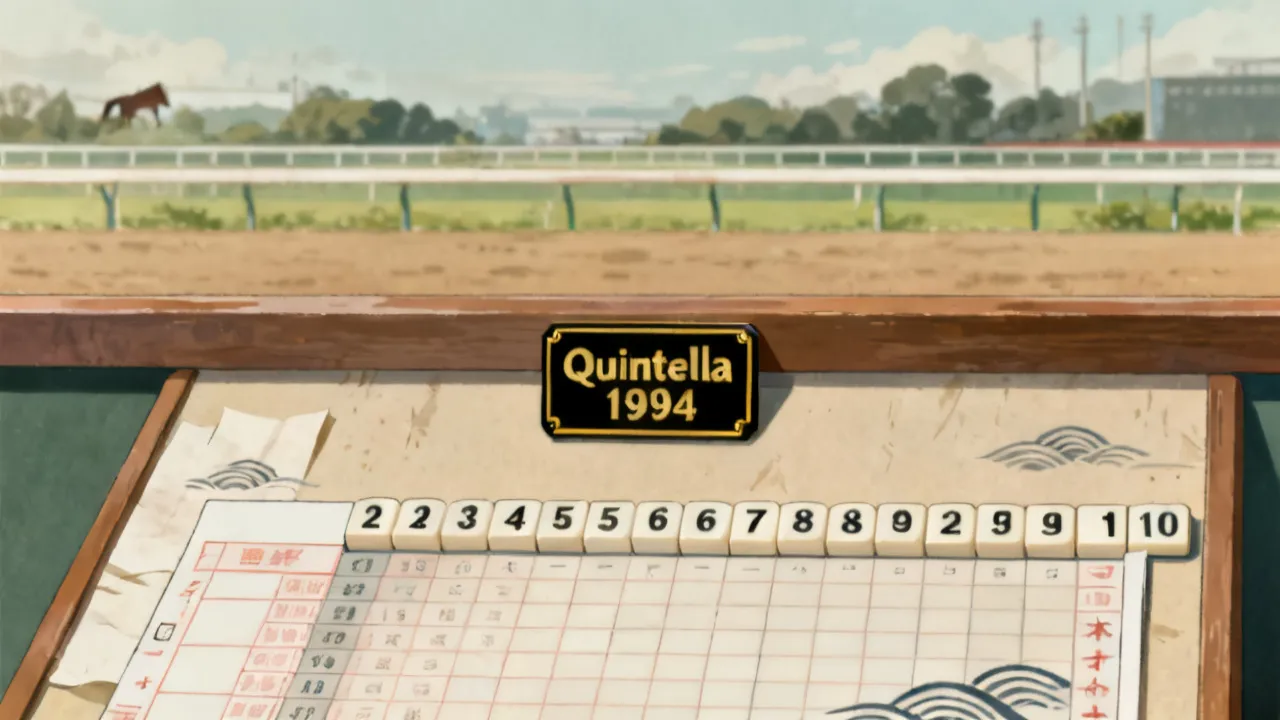
“Quintella 1994” is top understood as a historically framed label associated with quinella-style betting concepts—often used to describe a particular era, product line, or documentation style from 1994 rather than a fundamentally different wagering mechanism. For readers approaching this topic professionally, the key is not the label alone, but the practical ruleset: how the pool is structured, how combinations are evaluated, how outcomes are determined, and what constraints are enforced by the supplier and the host venue.
In practice, this means you should treat “Quintella 1994” as a pointer into a specific rule context. The label may be attached to archived catalogs, older wagering system documentation, legacy software identifiers, or content-management naming conventions used by bookmakers, betting platforms, or racing data vendors. Professional interpretation therefore requires disciplined verification—matching the label to the authoritative rule text for the relevant operator, region, and time period, then applying a consistent methodology for assessing payout logic and settlement outcomes.
Quinella-style wagering generally refers to systems where you select multiple horses (or outcomes) and the payout depends on whether those selections match the official result in the required position set. In many racing jurisdictions, a “quinella” is commonly associated with two-horse pair outcomes (the two finish in any order). A broader “quintella”-type label can also appear in markets that use five-horse combination logic, but the exact mapping depends on the operator’s rulebook.
Because “Quintella 1994” may appear as a named reference rather than a universally standardized contract term, professional evaluation should focus on the actual wagering rule document used at the time (or in the product listing) and the operational conditions under which bets are accepted. Put differently: you don’t evaluate a payout promise; you evaluate an administered contract.
To make that contract evaluation concrete, most quinella/quintella-style bets share a few foundational components:
When those components are carefully identified, the betting type can be analyzed like any other market instrument: you can compare risk, variance, and expected payout patterns under the operator’s rules, rather than relying on assumptions generated by a label.
In real-world usage, “1994” commonly signals one of the following: (1) an archive name from a historical dataset; (2) the year a specific betting format, brochure, software version, or supplier catalog was published; (3) a collector-friendly product label that distinguishes editions; or (4) a local indexing convention used by an organizer or content publisher. Without direct reference to a rulebook or official catalog entry, “1994” should be treated as contextual metadata—not as proof of a technical difference in odds, payouts, or mechanics.
Because “1994” can function as a label-layer rather than a rules-layer, professionals typically ask different questions than casual readers. Instead of “Is this different from quinella?” they ask:
Professional skepticism is not cynicism; it’s a methodological stance. When you treat “1994” as metadata, you preserve flexibility: you can confirm the mechanics without presuming a change or similarity that you cannot prove.
From an industry standpoint, “supplier details” matter because the same general wagering concept can be implemented differently. For example, operators may vary in:
Accordingly, when someone references “Quintella 1994,” the correct professional move is to locate the operator’s rule page or archived document for that specific edition/period, then confirm the applicable terms before relying on any public interpretation.
Beyond the rule differences, there are operational and service-level factors that influence outcomes perceived by customers. For example:
From a risk and compliance perspective, those operational factors matter as much as the underlying wagering math because they determine the reliability of settlement and the quality of customer remedies.
Even when a format is well-defined, racing wagering carries inherent variance. A professional approach does not treat any historical label as a performance guarantee. Instead, it emphasizes disciplined evaluation criteria such as:
A key professional distinction is between understanding a bet’s rules and believing a bet’s outcomes. Rules govern settlement; they do not guarantee profitability. When individuals misread rules as predictive signals, they can accidentally build strategies that are emotionally satisfying but mathematically unsound.
To maintain decision discipline, professional evaluators often use consistent pre-bet checks:
These practices make you a better evaluator of a market—even if you are not a bettor. The same mindset applies to analysts, product reviewers, and compliance professionals who interpret risk through the lens of rule-driven settlement.
You may see “price information” in contexts related to betting products, archived services, or third-party packages. In professional writing, “price” should be treated as a variable dependent on the operator’s fee model or product offering (e.g., platform charges, service tiers, or information package costs). If you encounter a “Quintella 1994” listing that mentions a price, the credible way to interpret it is to separate:
When reporting price figures, avoid unverified claims. “Price” can mean at least four different things in betting-adjacent content:
If you want, you can share the exact listing text (without sensitive personal data), and I can help you interpret what each “price” component likely means under standard operator models. The goal is not to guess—it’s to map each price field to the correct category so you can interpret it accurately.
In professional contexts, it is also useful to ask whether “price information” is presented as:
Without that mapping, readers can confuse operational fee schedules with settlement outcomes, creating a flawed understanding of how the market functions.
The table below is a supplement that compares typical “quinella/quintella-style” implementation aspects. Because “Quintella 1994” may refer to an edition or catalog label rather than a single globally standardized contract, use these rows as a checklist for verifying the exact rules with your supplier and host venue.
| Verification Item | What to Confirm | Typical Conditions/Requirements |
|---|---|---|
| Wager Mapping | How “quintella” (or the local equivalent) maps to finish positions | Order sensitivity, number of selected runners, and whether positions are exact or unordered |
| Official Result Source | Which publication is treated as authoritative for settlement | Use official race results and steward decisions posted by the governing body or host venue |
| Bet Acceptance Window | When bets can be placed and when they close | Cutoff time relative to start; account verification may be required before cutoff |
| Runner Scratches/Disqualifications | How cancellations and penalties affect your combination | Rules may allow refunds, substitutions, or voiding depending on timing and regulation |
| Settlement Timing | How quickly payouts are processed after the race | Operational policies vary; some channels settle faster than others |
| Eligibility Constraints | Who can place bets and through which channels | Jurisdictional limits, age requirements, and identification procedures |
| Customer Dispute Process | How errors are handled (bet confirmation, ticket printing, data mismatch) | Time-limited claims, evidence requirements, and audit trails for bet logs |
To add professional rigor, consider extending the process with a “verification trail” approach. That means you store the evidence that supports each stage of your interpretation: screenshots of the rule text, links to the archived catalog page, a copy of the acceptance window rules, and the official result reference used at settlement time.
In disputes, evidence matters because settlement decisions are often automated based on logged selections. If your selection was misinterpreted due to runner naming differences or a late operational update, the audit trail becomes critical. Professionals therefore treat the bet like a regulated transaction with traceable inputs and outputs.
Because “Quintella 1994” can appear in supplier catalogs or archived pages, treat the following as baseline requirements for responsible participation:
For a professional checklist, it is also useful to include “data integrity” elements. Those elements are not always spelled out in general advice, but they become crucial when you analyze outcomes or manage multiple bets across events:
These checks help avoid misunderstandings that can masquerade as “bad luck,” when in reality the transaction input did not match the intended selection.
Although casual readers sometimes use “quinella” and “quintella” interchangeably, professional handling distinguishes the two because the number of selected finishers (two versus more) affects both probability structure and payout logic. Even if “Quintella 1994” uses “quintella” as a label, your verification task is to determine the exact market definition in the 1994 document context.
In many betting systems, a quinella is essentially a market requiring two named outcomes to occupy two specific finishing positions (typically first and second), in any order. A quintella-market variant can require five named outcomes to occupy the top five positions (in any order), or another equivalent positional bracket depending on the operator’s product suite.
These differences matter for three major reasons:
A professional analyst or reviewer should therefore treat the “1994” label as a prompt to confirm whether the market is two-horse, five-horse, or another positional structure. Even when the operator uses a similar marketing name, the rule text is the final authority.
When reviewing a historical product listing, another professional consideration is backward compatibility. Some operators might have kept the “quintella” label for the customer-facing experience while internally adjusting the settlement algorithm. That would mean the name remained stable, but the mechanics could shift. For professionals, the name is not the contract; the contract is the rule set.
Most misunderstandings around quinella-style bets arise from edge cases. A professional evaluation therefore spends time on these scenarios because they define how the operator protects the integrity of the results and how customers are treated when events diverge from a simple “clean race” narrative.
Key settlement scenarios include:
If a runner is scratched, the operator must specify whether your bet is:
Professional readers should verify the timing of the scratch relative to the acceptance cutoff. Many rulebooks distinguish between pre-bet and post-bet changes, and between official scratch confirmations and “unofficial” late news. Settlement rules usually reference the official steward or governing body confirmation time, not social media rumors.
A disqualification can change the official finishing order. A quinella/quintella settlement typically follows the final official order. However, the operator might publish separate procedures for:
Professionals treat disqualifications as a normalization problem: the official order used for settlement is the final standard, and any mapping must follow how the operator defines “official result.”
Dead heats can be especially relevant for markets that depend on specific finish positions. Rulebooks often specify:
For analysts, dead heats change the “effective field” of winning combinations. For customers, they change whether their selection should be considered correct. For operators, dead heats test the clarity of their algorithm and settlement governance.
Some “quintella-style” products may be nested within a broader event structure—e.g., multi-race coupons or conditional markets. Even if “Quintella 1994” seems single-race oriented, the label might refer to a broader product suite with layered settlement conditions. Professionals should therefore check whether:
Layered outcomes affect the customer’s perceived risk because failure in one layer can void the entire bet.
“When betting closes” is often described informally as “minutes before the race,” but professional systems require precise cutoff definitions. “Quintella 1994” references may imply a time-window configuration unique to that era or product version. Even if the user interface is the same, the backend cutoff timing can differ.
Important professional points include:
If “Quintella 1994” is associated with an older system, professionals should confirm whether the cutoff logic is consistent with modern settlement methods or whether historical products used different rules. This matters because a late bet accepted under one system might be rejected under another, and disputes often revolve around whether the bet was accepted before the official cutoff time.
Professional evaluation relies on a stable concept of truth: the official result publication. When interpreting “Quintella 1994,” you might be tempted to use any convenient results source. Professionals avoid that temptation because:
Therefore, your verification step should explicitly identify:
In a professional environment—whether for compliance, analytics, or product evaluation—treat official results like a dataset with versioning. “The official result” must be the final settled dataset as defined by the operator and governing body.
Even when you have the correct rules, professional thinking asks: what is the distribution of outcomes, and how does your stake compare to that distribution? “Quintella 1994” might tempt readers with the idea of “higher payouts due to complexity,” but complexity alone does not ensure value.
Variance arises because quinella/quintella markets require multiple correct placement outcomes simultaneously. Even if two runners are individually strong, a market requiring both to be in the top set increases the chance of failure if one runner underperforms. Higher payout for “rare hits” is a typical market feature, but it must be weighed against:
Professionals often use expected value concepts even if they do not compute precise numbers for every decision. At minimum, they compare:
This is especially relevant for “Quintella 1994” references because historical datasets might include payouts that do not perfectly match current market formats or settlement methods. A careful professional links each payout figure back to its specific rule text and operator settlement algorithm.
Professional evaluation is not complete without considering how payouts are delivered and how disputes are handled. Even if your understanding of quinella/quintella mechanics is correct, a flawed operational experience can influence customer satisfaction and perceived fairness.
Key operational factors include:
In disputes, the operator’s internal audit trail often determines the outcome. Therefore, a professional should keep proof of the bet placement time and the exact selection values stored in the bet ticket. The goal is to reduce ambiguity and to align the customer’s understanding with the operator’s logged transaction record.
If “Quintella 1994” corresponds to an older product or documentation, dispute procedures could be different from modern ones. Professionals should not assume that modern dispute handling applies retroactively. Instead, verify the terms associated with the same operator and time period.
To make the professional approach more tangible, here are example questions professionals would ask when encountering a “Quintella 1994” label in a listing, archive, or documentation:
Ask: Does the market treat finishing in either order as a winner? Many quinella markets do, but always verify. Some operators have market types where order matters (or where order matters only in specific subcategories).
Ask: Is the bet voided, refunded, or adjusted? And is that treatment dependent on timing (e.g., whether the scratch occurs before or after acceptance cutoff)?
Ask: Do they use the final amended order from steward rulings? If an initial result list is posted and later corrected, which one settles the bet?
Ask: If there’s a dead heat at a relevant position, does the operator expand the top set to include both tied runners or shift positions? The answer changes settlement outcomes dramatically.
Ask: Does “1994” correspond to a product version with unique rules, or is it just a catalog identifier? The answer determines whether the rule text still matches the transaction.
These questions reinforce the professional mindset: interpret labels as leads, not as proof. The proof lives in the rule text, settlement algorithm description, and official settlement definitions.
This expanded process emphasizes traceability. Professionals do not merely “know the rules”; they can show where the rules were obtained and how their interpretation aligns with the operator’s defined settlement behavior.
Because “Quintella 1994” can appear in supplier catalogs or archived pages, treat the following as baseline requirements for responsible participation:
One professional habit that reduces frustration is to routinely check that your placed bet matches your intended selection set. This includes verifying that:
With that practice, “Quintella 1994” becomes a controlled variable in your decision-making rather than an ambiguity that you discover only after settlement.
No. The “1994” label often functions as contextual metadata (edition, catalog archive year, or naming convention). The wager’s mechanics should always be confirmed using the operator’s specific rule documentation.
No. Historical labeling does not inherently change the wagering math, payout distribution, or variance. Professional assessment focuses on official rules and current operator settlement policies. If the historical document describes rules that are not currently used, “1994” becomes even less relevant to payout mechanics.
Look for the operator’s official wager rules, terms and conditions, or archived product documentation. If the listing is ambiguous, contact the supplier’s customer support and request the specific rule reference used for settlement. Ask them to confirm:
Confirm whether the operator voids the bet, refunds it, or applies substitutions based on timing and steward rulings. These conditions are decisive for whether your combination remains valid. Also check whether the operator uses the final amended order from steward decisions for settlement.
Use the governing body or host venue’s official results publication and any steward decision documentation. Relying on third-party summaries can introduce errors if details are updated after initial publication. For professional verification, match the operator’s definition of “official result” rather than relying on the first posted data you find.
Academic work and industry monitoring often focus on odds behavior, market efficiency, and risk management rather than guaranteeing outcomes. For rules and settlement procedures, the most reliable sources are official operator terms and the governing body’s regulations. If you want to do deeper analysis, peer-reviewed studies on pari-mutuel betting dynamics and market efficiency can provide useful context for how prices and payouts may behave.
For any statistical or operational claims, defer to authoritative references such as official race result publications, steward reports, and operator terms. Where you need an external framework for wagering research, consider peer-reviewed studies on pari-mutuel betting dynamics and market efficiency. As a baseline, the following categories of sources are typically considered reliable:
If you share the specific operator or country/region context you’re working with (and any “Quintella 1994” listing text you have), I can suggest the very appropriate official sources to consult for that jurisdiction. The “best” source depends on the governing authority and how the operator references official result formats and settlement authority.
“Quintella 1994” can be a useful label for locating an archived concept, catalog edition, or historical reference point. However, professional practice requires confirmation of the wager’s exact structure, settlement rules, acceptance conditions, and eligibility requirements as defined by the relevant supplier and host venue. By applying the verification checklist and step-by-step guide above, you can interpret the label accurately and make decisions grounded in documented rules rather than assumptions.
Ultimately, the most important professional takeaway is that labels are not mechanics. Mechanics live in rulebooks, settlement definitions, and official results governance. When you treat “Quintella 1994” as a lead to those artifacts—rather than as a standalone guarantee—you reduce confusion, strengthen auditability, and improve your ability to evaluate the market responsibly.




This guide explains how to evaluate Xvideos and comparable adult video platforms responsibly, focusing on safety, legal considerations, and user protection. It provides objective background on why consent, age verification, privacy controls, and content moderation matter when browsing online video services, and how to choose settings that reduce risk for viewers and families.
This guide explains how “Quintella 1994” fits within the broader framework of quinella-style racing wagering, with an emphasis on responsible, informed decision-making. It provides objective background on how quinella concepts work, what “1994” typically signals in collectors’ or historical contexts, and how to evaluate offerings by supplier, venue rules, and risk conditions—without relying on unverified claims.

Vitrali Moema is a design-forward approach to glass detailing that elevates Brazilian residential and commercial spaces through light, texture, and precision finishes. Background context: in Moema-area design culture, vitrals and glass mosaics are used to balance privacy and brightness, while suppliers focus on compatible framing, installation discipline, and maintenance planning.

Vitrali Moema guide helps you assess quality, aesthetics, and practical factors when selecting glass feature pieces for nearby spaces. Vitrali Moema typically refers to curated vitrali-style installations—often associated with decorative, translucent glass and architectural detailing—used to elevate ambiance while balancing durability and maintenance. This article provides objective guidance for planning, sourcing, and comparing options.

This guide explains how codes such as “y8e0f” and similarly formatted identifiers can be interpreted in procurement, compatibility checks, and troubleshooting workflows. Objectively, such tokens often function as internal model markers, revision IDs, or inventory keys. You’ll also find practical comparison guidance, sourcing conditions, and expert Q&A to reduce mismatch risk.

This guide explains Liliane in a practical, professional way, clarifying how the name functions in real-world contexts and why careful selection matters. Objectively, it examines common reasons people encounter “Liliane,” the linguistic and cultural nuances of similar forms, and the due-diligence steps experts use to verify context, usage, and consistency across materials.

